 5 min read
Arabelle Sicardi is a Taiwanese American writer and the author of both The House of Beauty: Lessons from the Image Industry and the popular Substack newsletter You’ve Got Lipstick on Your Chin. In their new column Scentiments, Sicardi will take a critical look at perfume as both pleasure and provocation—using scent to question taste, trends, and the truth underneath it all.
It’s hard to find pleasure in beautiful things when beauty is constantly surrounded by tragedy and crisis—and sometimes it is stained by the context of reality. Take one example: despite the notes of Commodity’s “Ice(d)” fragrance sounding, at first sniff, to be delightful, the idea of buying a fragrance with such an unfortunate name when the American immigration raids are disappearing more and more people throughout the country, does not, personally, excite me.
Perfume has never been apolitical, even if our personal purchases are often ways for us to comfort or distract ourselves from the chaos beyond our vanities. Perfume has historically evolved through political crises. Throughout centuries and empires, it’s been deployed as protection during plagues, as propaganda during war, as an invisible sign of resistance in untenable times, and as a marker of political identity. Across eras, fragrance has silently signaled power and belonging: from enslaved people anointing themselves to mimic nobility, to customers buying cause-marketed scents today.
The very materials of any perfume—from anywhere—come from places shaped by politics and power struggles. The ouds and spices that frequently make up the longest-lasting base notes of your beloved fragrance collection became popular on the Spice Road among the first traded materials between countries. The dark, resinous wood known as oud is considered to be as expensive as liquid gold, and the trade in it has made its merchants wealthy across generations. You’ll smell versions of it in fragrances like Tom Ford’s Oud Wood, Initio’s Oud for Greatness, and Gabar’s 02 Oud. While Grasse, France, is considered the cradle of European perfumery, the industry’s roots go back centuries before industrialization, to wealth extracted from other colonies and countries. Historian Mathilde Cocoual describes the power relations in perfumery succinctly: “From the mid-19th century onwards, the great houses of Grasse built their fortunes by establishing themselves in the colonies: Algeria, Madagascar, the Comoros, French Guiana.” The fertile ground of conquered lands became the bounty from which fragrance empires have been made.
And as empires are built, revolutions and resistance are inevitable. Resistance can come in many forms: fragrant, messy, silent, chaotic, or ordered. Napoleon Bonaparte was famous for his excessive love of Eau de Cologne, and ordered many dozens of bottles for his personal use while traveling around to conquer, and a version of his favorite formula is still produced today. During the French Revolution, just a few years later, young counter-revolutionaries in Paris called themselves muscadins, meaning “musk-wearers,” and doused themselves in musk before attacking the Jacobins in the streets. The musk they wore is now banned because the hunt for musk deer nearly drove them to extinction. The musks wrapped into so many fragrances today, like Glossier’s You or Serge Lutens’ L’Orpheline, are a synthetic facsimile: a dupe, not an animal-derived product at all. They are still beautiful; they’re simply not a trophy hunt.
Smelling “good” or “bad” has often been a political strategy. During the Opium Wars in the 1840s, Qing Dynasty soldiers threw ceramic “stink pots” onto British ships. These contained sulfur, pitch, and rotting fish, and when ignited, they became suffocating stink bombs. Fragrance was a sensory weapon, then. It signaled belonging to a belief and a war strategy—not just something to wear for simple beauty. Perfume culture’s current obsession with “power” fragrances, those bold fragrances that fill a room and yet men inexplicably insist on dousing themselves in dozens of sprays of the stuff—they are, in a sense, the modern-day stink bombs. They demand you witness them—perhaps even fear them—just like the originals. Over-spraying can transform even the most elegant cologne into a biological hazard. Have some couth, or you’ll clear the room.
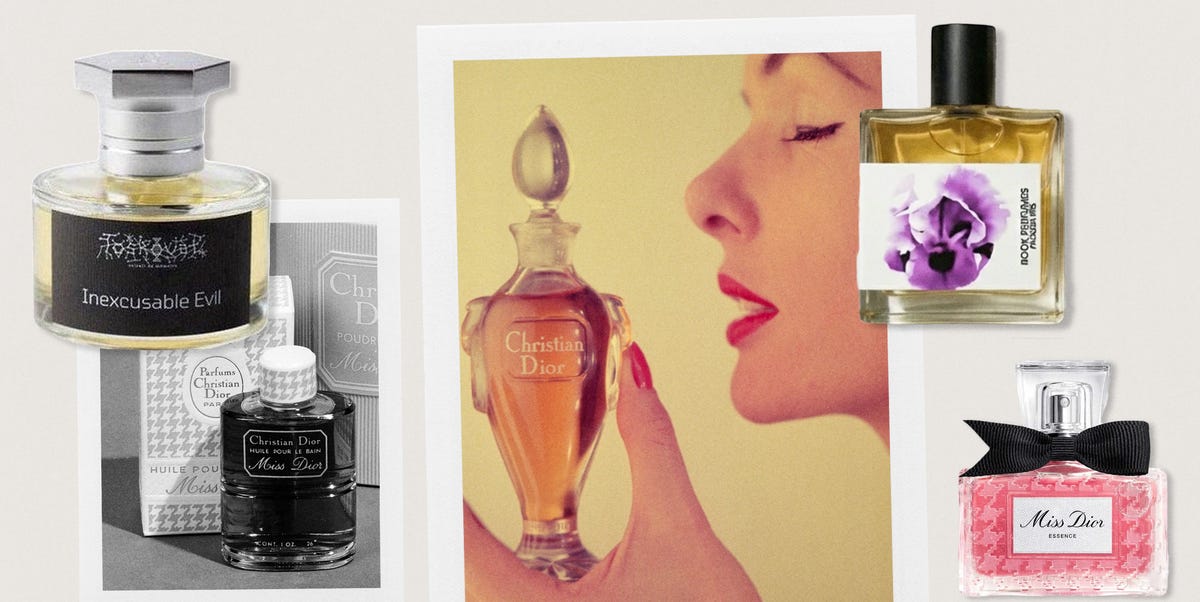
Simply because these are historical examples doesn’t mean modern-day perfume consumption is any less laden with references and intent. The beloved Miss Dior, originally released in 1947, was a tribute to Christian Dior’s younger sister, Catherine. Catherine was a hero of the French Resistance during World War II. She’d been arrested, tortured, and survived a concentration camp. She earned honors from three different countries for her bravery during the war. When she returned home, she spent long hours tending to the family’s gardens in Provence, willing the horrors she’d endured to burrow into deeper corners of her past. She loved tending to the garden before the terrors began. Christian immortalized her love of flowers and her resilience through Miss Dior, and it debuted the same year he introduced the world to the “New Look.” It’s a gorgeous formula made all the more remarkable by the person it honors.

Fragrance is sometimes escapism and often fantasy, but it is always storytelling. It’s a record of how power moves through and around the body; it is a record of the materials of the land, the science, and the rituals that make beauty possible. Perfumers themselves are making fragrances their vessels of political stances, too. Niche perfume brand Toskovat’s most popular fragrance, Inexcusable Evil, is inspired by the destruction of war. It has notes of ozone, gunpowder, blood, and flowers. The perfumer’s description: “The next war will decide not what is right, but what is left. Hate all governments & love all people.” Such a stance speaks to many: stockists have a hard time keeping it on the shelves.
The U.K.-based Rook Perfumes formulated Faqqua Iris, a delicate, violet iris fragrance inspired by the Palestinian people and their love of iris, and all profits from the perfume go to Gaza. The vegan perfume brand 7 Virtues sources all its materials from fair-trade projects in nations rebuilding after war and donates proceeds to initiatives that end period poverty for women and girls. The founder Barb Stegemann’s tagline is very pointed: “My job is to make rebuilding sexier than destruction. I do this through perfume.”
The next time someone dismisses scent culture as silly or apolitical, just remember: both history and living perfumers would beg to differ. The proof is in the perfume.